Villa extension approval Dubai: NOC, permit and cost
Villa extension approval in Dubai needs three things in the right order: a developer NOC, drawings signed by a Dubai registered engineer, and a permit from Dubai Municipality or Trakhees. Done properly, the approval stage costs 12,000 to 30,000 AED for a typical extension and takes 6 to 12 weeks. This page follows the file from the first community check to the completion certificate, and names the five problems that turn a three week approval into three months.
Villa extension Dubai approval: what is required
A villa extension in Dubai cannot start until the authority that governs the plot issues a permit, and which authority that is comes down to location rather than size. Approval is a separate stage from construction, with its own drawings, its own fees and its own inspections.
Three approvals sit inside the phrase, and owners often treat them as one:
- A developer NOC from the master developer of the community
- A permit from Dubai Municipality or Trakhees, depending on where the plot sits
- Trade licences for the contractor and for the engineer who signs the drawings, matching the submission
Get them in the right order and the timeline is predictable. Miss one and the file goes to the back of the queue.
House extension approval in Dubai: the same file
House extension approval in Dubai is the same submission as a villa extension, with the same drawing pack and the same fee scale. Nothing changes because the building is called a house rather than a villa. What changes is the community rulebook the design has to sit inside, covering height, setbacks, roof form and external finish.
Why work with ROUND TRIANGLE DECORATION CO. L.L.C
- Line by line reading of the quote you already hold, before you commit
- A clear price for the same villa scope, from 100,000 AED
- One WhatsApp number for quotes and site updates, +971 50 786 0555
- A written scope, drawing list and fee breakdown before work starts
- Extension, modification and renovation handled by one contracting team
- Approval paperwork coordinated with Dubai Municipality, Trakhees and developer NOCs
Which authority signs off on a villa extension in Dubai
The approving authority depends on where the villa sits, not on how big the extension is. Mainland plots go through Dubai Municipality with DET behind contractor licensing, free zone communities go through Trakhees, and villas inside a master community need the developer NOC before either authority opens the file.
Dubai Municipality and DET for mainland villas
On a mainland plot, the villa extension permit is issued by Dubai Municipality. DET sits in the background. Your contractor and the engineer who signs the drawings both hold trade licences, and the Municipality checks those numbers against the submission. When owners talk about Dubai Municipality villa extension approval, this is the step they mean.
Trakhees for free zone communities
Villas and townhouses inside free zone developments fall under Trakhees instead. The document pack looks similar and the fee scale is close, but the review route and the inspection booking work differently. A developer NOC does not replace a Trakhees permit.
Trakhees approval for a villa renovation
Trakhees approval for a villa renovation runs through the same route as an extension permit, with a different drawing set. The submission shows the existing layout, the proposed layout, the walls that move and the structural report for any wall carrying load. Interior work that moves walls, services or the external envelope belongs in that same file, and doing both in one submission avoids a second review cycle.
Villa extensions in Falcon City
A villa extension in Falcon City is reviewed through Trakhees rather than Dubai Municipality, because the development sits inside a free zone. The developer NOC still comes before the permit, and the drawing pack listed below still applies. Confirm the current community rules on setbacks, height and finish with the developer before you pay an engineer for drawings.
Developer NOC before the permit
Emaar, Nakheel, Meraas and the smaller master developers issue the villa extension NOC. It confirms two things. Your design respects the community rules on height, setbacks, material and finish. Your contractor is approved to work inside that community. In most communities there is no permit without it.
What you must submit for a villa extension permit in Dubai
A complete pack is the difference between a three week approval and a three month one. One missing document usually sends the file back to the end of the queue.
- Architectural drawings: floor plan, elevations, section, and a site plan showing the extension footprint against the boundary
- Structural drawings plus a calculation report from a Dubai registered engineer
- Title deed copy and the plot plan
- Developer NOC for the community
- Contractor trade licence and DET registration
- Owner passport and Emirates ID copies
- Photographs of the existing villa and the extension zone
For a second floor addition approval Dubai submissions add one item owners routinely underestimate: a full structural calculation report covering the existing foundations and columns. A ground floor extension can sometimes be signed off on standard details. A second floor almost never can.
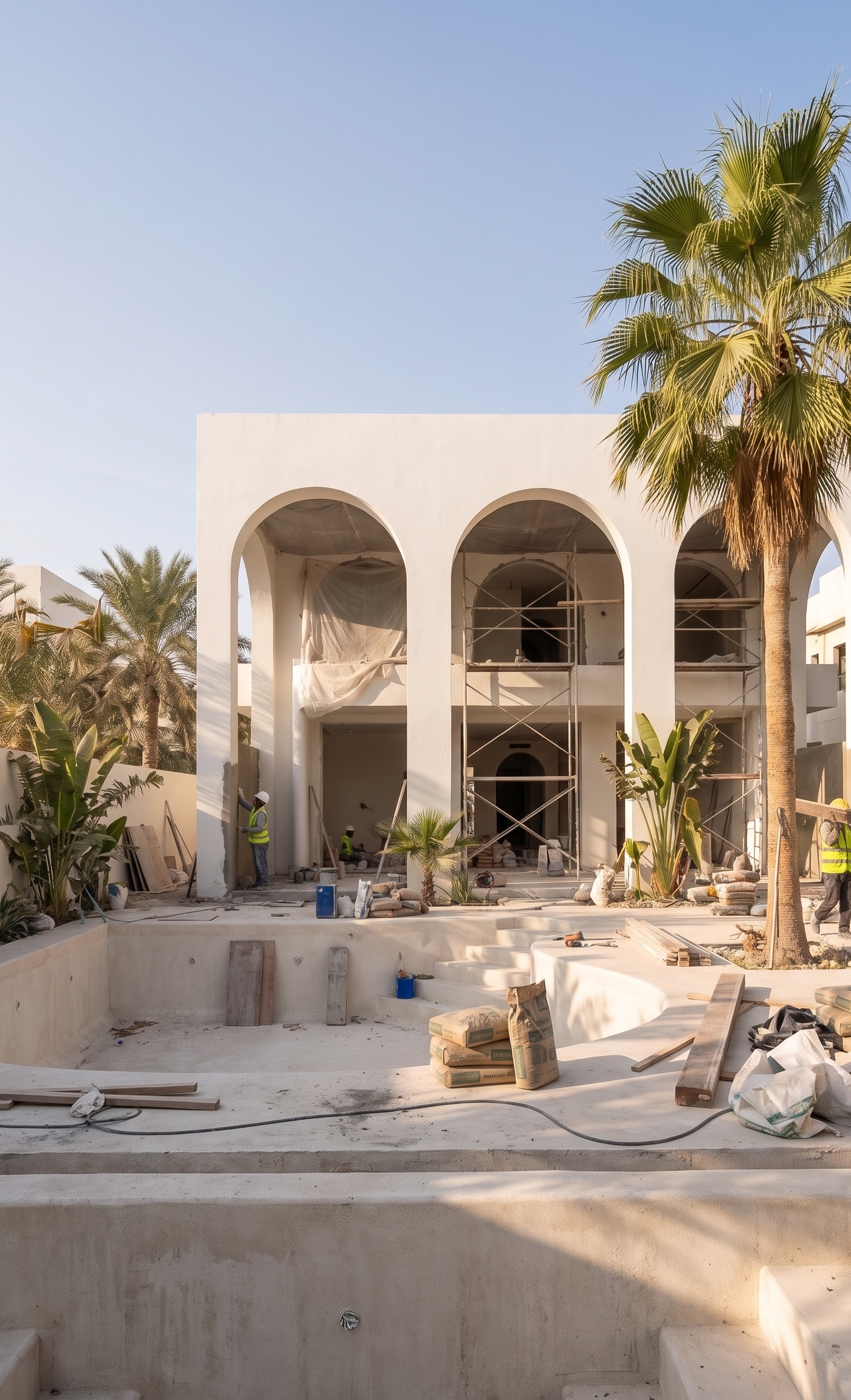 Shell stage of a villa extension: arches formed and pool excavated before the structural inspection.
What villa extension approval costs in Dubai
Approval fees are separate from construction. For a 60 m² rear extension, the approval budget usually lands between 12,000 and 30,000 AED, and the spread comes mostly from the community rather than from the drawings.
| Item | Typical fee in AED | Notes |
|---|---|---|
| Architectural drawings | 4,000 to 9,000 | Dubai registered engineer |
| Structural calculations | 3,000 to 6,000 | Required for a second floor |
| Municipality or Trakhees permit | 2,000 to 6,000 | Based on built-up area |
| Developer NOC | 1,000 to 5,000 | Emaar, Nakheel, Meraas communities |
| Refundable security deposit | 5,000 to 20,000 | Returned after completion |
| Total approval budget | 12,000 to 30,000 | 60 m² rear extension |
The permit fee is rarely the biggest line. The refundable community deposit usually is, and you get it back after the completion certificate is issued, often four to eight weeks after the final inspection. Construction is a separate number that starts from 100,000 AED with us for a typical extension. For the build side broken down properly, read what a villa extension in Dubai actually costs.
Extension villa: what to check before you sign
An extension villa contract should carry the approval cost on its own lines, separate from the build. Most owners only discover that it does not when the first invoice arrives. Four things to check on the quote in front of you:
- Approval fees listed separately, not folded into one lump sum
- A contractor licence that covers the community where the villa sits
- The name of the engineer who signs the drawings and holds the structural report
- Who books the inspections, who collects the completion certificate and who claims the deposit back
If one of the four is missing, the quote cannot be compared with another one, and the missing item is usually the one that lands on your invoice later.
The approval sequence and timeline
Most extensions clear in 6 to 12 weeks. The order matters more than the speed of any single step.
- Check what the community allows. Confirm setbacks, height limit and approved materials before you pay an engineer.
- Apply for the developer NOC. Two to four weeks in most large communities.
- Appoint a Dubai registered engineer and produce the drawings. One to three weeks.
- Submit to Dubai Municipality or Trakhees with the NOC attached.
- Pay the permit fee and collect the permit. Review normally takes two to four weeks.
- Build, and book the structural inspection at the correct stage.
- Book the completion inspection, collect the completion certificate, then claim the deposit back.
If the same project also covers internal changes, this runs alongside the full villa modification approval sequence.
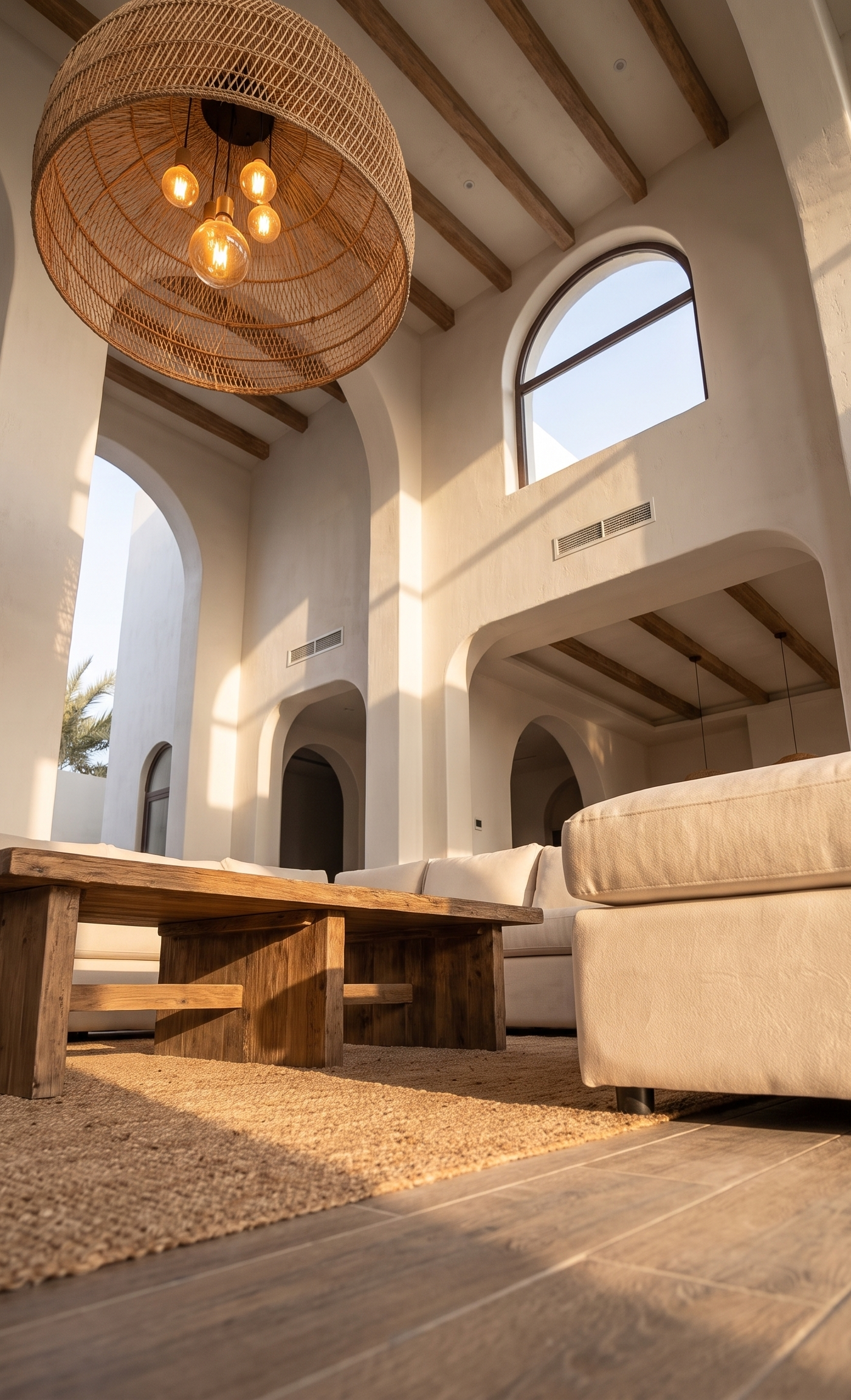 Interior of an approved extension, handed over once the completion certificate is issued.
What stalls a villa extension permit in Dubai
Five problems cause most of the delays we are called in to fix. Every one of them is visible before submission.
- Contractor licence not approved for the community. The NOC application stalls at step one, after the owner has already paid a deposit.
- Boundary or setback breach. Two metres to the boundary is a common community rule. A design at 1.5 m gets rejected and redrawn.
- No structural calculation for a second floor addition. Reviewers return the file when the existing columns and foundations were never assessed.
- Community design guidelines ignored. Roof form, external colour and window style are controlled in Emaar and Nakheel communities.
- Work started before the permit. Inspectors can stop the site, and the completion certificate then becomes very hard to obtain.
Why an unapproved extension hurts your resale and can end in demolition
An extension built without a permit sits on the plot and stays off the record. Banks decline mortgages on villas with unauthorised built area, valuers price the house without the extension, and Dubai Municipality can issue a violation notice with a demolition order attached. Fines are calculated on the unauthorised built area and can run into tens of thousands of AED on top of demolition and reinstatement.
The fix is almost always cheaper than the fine. If you already hold a contractor quote, send us the quote you already have and we will read it line by line, show you where the approval scope and drawing fees are missing, and give you a clear price for the same villa work from 100,000 AED. If interiors are the bigger part of your spend, real AED numbers for villa renovation covers that side.
Frequently asked questions
How long does villa extension approval take in Dubai?
Most approvals take 6 to 12 weeks from the developer NOC application to the issued permit. The NOC alone runs two to four weeks in a large master community, and Dubai Municipality or Trakhees review usually adds another two to four weeks. Incomplete drawing packs are the main reason a file stretches past 12 weeks.
How much does a villa extension permit cost in Dubai?
For a 60 m² rear extension, budget 12,000 to 30,000 AED across engineer fees, structural calculations, the permit fee, and the developer NOC plus deposit. The permit fee itself is usually only 2,000 to 6,000 AED of that figure. Refundable community deposits of 5,000 to 20,000 AED come back once the completion certificate is issued.
Do I need approval for a second floor addition in Dubai?
Yes. A second floor addition needs its own permit and a full structural calculation report covering the existing foundation and columns. It is not treated as a minor modification, even when the new floor is small. Building without it exposes the villa to a violation notice and a demolition order.
What is a villa extension NOC and who issues it?
The NOC is a no objection certificate from the master developer confirming that your design follows community guidelines and that your contractor is approved to work there. Emaar, Nakheel, Meraas and other master developers issue it. Dubai Municipality and Trakhees normally will not process the permit without it.
What is the Emaar NOC approval process for a full villa renovation in Dubai?
The Emaar NOC is the first approval in the file and it has to be issued before the permit submission moves. Emaar reviews the drawings against the community guidelines at the same time as it checks that your contractor is approved to work inside the community. For a full villa renovation you submit the layout and elevation drawings, the contractor trade licence and the owner documents, then carry the NOC into the Dubai Municipality or Trakhees file. Without it the permit application is not accepted.
Which contractors handle villa extension approval in Dubai end to end?
A general contracting company whose trade licence is approved for the community, working with a Dubai registered engineer who signs the drawings, handles the file end to end. The contractor applies for the developer NOC, submits to Dubai Municipality or Trakhees, books the structural inspection and claims the refundable deposit at the end. Ask for the licence number and the engineer name before you sign, because the NOC application stalls at step one when the licence is not approved for that community.
Can work start before the villa extension permit is issued?
No. Site work before the permit is issued counts as an unauthorised build, and inspectors can stop the site, raise fines and require reinstatement. It also makes the completion certificate impossible to obtain, and that certificate is what banks and buyers ask for at resale.