Villa modification approval Dubai: the full sequence
Villa modification approval in Dubai runs through one of three authorities depending on where the villa sits, and the order you approach them matters more than the paperwork. Here is the real sequence from first drawing to final inspection, what it costs in AED, and what sends a file back for re-submission.
Why work with ROUND TRIANGLE DECORATION CO. L.L.C
- Licensed Dubai general contractor on villa modification and renovation scopes from AED 100,000
- Line by line audit of the quote you already have, before you commit to anything
- Same villa scope repriced clearly so you can compare like for like
- Written breakdown of approval fees, consultant fees and construction cost
- Direct line on WhatsApp and phone at +971 50 786 0555
- One contractor accountable for approvals, MEP works and finishing
What counts as a modification that needs approval
Anything that changes the structure, the footprint, the MEP system or the outside look of the villa needs approval. So do new rooms, extensions, boundary walls above the allowed height, majlis conversions, roof changes, extra floors, new bathrooms, kitchen relocations, pool additions, pergolas, and any change to water, drainage or electrical load.
Pure internal finishes usually do not need a modification approval. Paint, wallpaper, flooring replacement, swapping kitchen cabinets of the same size, retiling an existing bathroom and changing light fittings on existing points are decoration, not modification. The moment you shift a wall, add a wet area or increase electrical load, you are inside the approval system and unpermitted work starts to cost money.
There is one grey zone worth naming. A wall that comes down without touching structure, load or drainage is often treated as finishing, but the community or developer may still want the NOC because of noise, waste removal and working hours. Check that level before you book a skip.

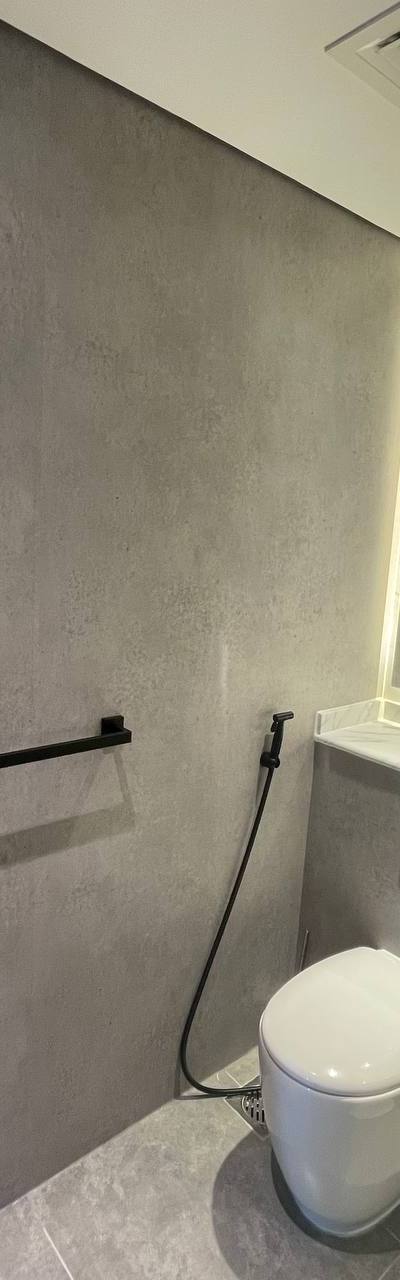
A villa bathroom after a wet area change, the type of modification that needs approval before the first tile is lifted.
Who approves what in Dubai
The approval authority depends on the plot, not on the contractor. Mainland villas fall under Dubai Municipality, with DET involved where the villa sits on a commercial or mixed-use plot or where the use itself is changing. Free zone communities run through Trakhees, the Ports, Customs and Free Zone Corporation arm, which is why villas on Palm Jumeirah, in Jumeirah Islands and in Discovery Gardens follow the Trakhees route instead of the Municipality route.
Above that sits the developer layer. Emaar, Nakheel, Meraas and similar master developers issue their own community NOC before any work begins, and that NOC sits on top of the authority permit. The stack in practice looks like this:
- Developer or community NOC: clears the named contractor, working hours, site hoarding, waste removal and design guide compliance
- Authority permit: Dubai Municipality, DET or Trakhees approves the drawings, the structural intent and the MEP changes
- Service authority approvals: DEWA for supply and load changes, Civil Defence where fire safety is affected
Skip the community level and the authority may still stamp your drawings while the security gate stops your labour at the entrance. Both layers are real and both have to be cleared.
The submission route, step by step
- Appoint a licensed architect or engineer. Only a licensed consultant can open a file and submit the drawing set. An unlicensed contractor cannot do it for you, no matter what the quote says.
- Secure the community NOC first. Send the consultant details, the scope and the expected timeline to the developer, then wait for the clearance letter before spending on drawings.
- Prepare the drawing set. Architectural plans with before and after, structural drawings if a wall, slab or column is involved, and MEP drawings if points, pipes or load change.
- Decide on a structure or soil check. Older villas, added floors, heavy pools and missing original drawings all push the consultant towards a structural assessment before the file moves.
- Submit to the authority. Dubai Municipality, DET or Trakhees reviews the package with the NOC attached. First-pass comments are normal, not a red flag.
- Pay and collect the permit. Fees are per authority and per scope, and the permit is issued to the contractor for display on site.
- Build, then inspect. The completion inspection closes the permit and unlocks the DEWA connection and final handover.
The parallel touchpoints: DEWA, Civil Defence and completion
DEWA approval is not a step at the end. If the modification increases electrical load, adds a water tank, moves a meter room or changes drainage, DEWA reviews the load schedule and the plumbing layout before the connection is altered. Load increases are the most common reason a Dubai villa renovation stalls at the final stage, so the load calculation belongs inside the drawing set, not in a phone call three months later.
Civil Defence applies when the work touches fire safety. That means a new garage, a kitchen hood needing suppression, a staircase change or anything affecting exit routes. Most small internal modifications never reach Civil Defence. Anything with an added floor or a changed exit does.
The completion step is where unpermitted work becomes expensive. The inspector compares the site to the approved drawing. A wall built that is not on the drawing means the permit cannot be closed, and you pay for a re-submission, sometimes for demolition.

Vanity, vessel sink and LED mirror in a finished villa bathroom, with the city skyline framed through the doorway.
How long villa modification approval takes in Dubai
Approval typically runs 4 to 8 weeks end to end. The split below is where the time actually goes.
| Stage | Typical duration | What causes delay |
|---|---|---|
| Community or developer NOC | 5 to 15 working days | Missing contractor documents, design guide conflicts |
| Drawing preparation | 7 to 14 working days | Missing original drawings, structure survey needed |
| Authority review, first pass | 10 to 20 working days | Comments on setbacks, height, structure or MEP |
| Re-submission after comments | 5 to 10 working days | Incomplete replies to reviewer comments |
| DEWA and Civil Defence where applicable | 1 to 4 weeks | Load schedule errors, missing fire drawings |
| Completion inspection and permit closure | 1 to 2 weeks | Work that does not match the approved drawing |
The single biggest time saver is a consultant who has submitted to that specific authority before. The second is answering reviewer comments in full on the first reply instead of one comment per round.
What approval costs on a real villa job
On a villa renovation of AED 100,000 and above, the approval side usually lands between AED 3,000 and AED 8,000. That covers authority permit fees plus the consultant or engineering fees for the drawing set and the submissions. Trakhees files and files carrying structural change sit at the higher end. Small internal MEP changes sit at the lower end, often around AED 3,000 to AED 4,500 all in.
Re-submission fees are the line nobody plans for. They get triggered by drawings that contradict site, a design that breaches the developer guide, missing NOC attachments, or a scope change after the permit was issued. Adding a bathroom after submission normally means a fresh submission rather than an amendment, so decide the scope before the file goes in.
If you already hold a quote, the approval and consultant lines are exactly where the weakness hides. Send us the villa quote you already have and we read it line by line, flag the missing approval items, and price the same villa work from AED 100,000. The team is on +971 50 786 0555 if you want a second opinion on the sequence before you spend.
What gets a villa modification rejected
- Unpermitted add-ons already built, such as a store room or covered car park that shows up on the site survey but on no approved drawing
- Boundary, height or setback breaches, including a first floor that exists inside the allowed envelope on paper only
- Missing community or developer NOC, usually an attempt to save two weeks that costs six
- An unlicensed contractor named on the submission, or a licensed contractor the developer has not approved
- Structural change with no engineer of record and no calculation behind it
- MEP change with no load schedule, which is the most frequent DEWA rejection
If you want the document checklist itself rather than this sequence, our companion guide on villa renovation permits in Dubai lists exactly which papers go into the file. That piece covers what to attach. This one covers the order the approvals happen in and who stamps what, so the two work together rather than repeating each other.
Sequencing it without losing weeks
The short version is NOC first, drawings second, authority third, DEWA and Civil Defence in parallel where they apply, inspection last. Owners who run it in that order finish in 4 to 8 weeks. Owners who start building first and ask about approval later pay the same money twice. If you are still choosing who runs the job, start with a villa renovation contractor in Dubai who can show you a closed permit from a similar villa, then read more Dubai villa renovation guides before you sign anything.
Frequently asked questions
Do I need Dubai Municipality approval for a villa kitchen or bathroom renovation?
Only if you move drainage, add a fixture or change the electrical load. Swapping a kitchen in the same position with no pipe or point changes is finishing work and needs no permit. Once you shift the sink, add a bathroom or run a new circuit, it becomes a modification and needs approval before work starts.
Is Trakhees approval needed for a villa on Palm Jumeirah?
Yes. Communities inside the free zone, including Palm Jumeirah, Jumeirah Islands and Discovery Gardens, are approved through Trakhees rather than Dubai Municipality. The developer NOC still applies on top, and both are normally submitted as one package by the licensed consultant.
How much does villa modification approval cost in Dubai?
On a villa renovation of AED 100,000 and above, expect AED 3,000 to AED 8,000 for the approval and consultant side. That range covers authority permit fees plus engineering or architect fees for the drawings and submissions. Structural change pushes it towards the top, and re-submission fees are charged separately.
How long does villa modification approval take in Dubai?
Plan for 4 to 8 weeks from the day the consultant starts drawing to the day the permit is issued. The NOC takes 5 to 15 working days, the first authority review 10 to 20 working days, and each re-submission adds 5 to 10 working days. DEWA and Civil Defence run in parallel and can add 1 to 4 weeks if load or fire safety is affected.
Can I start work before the villa modification approval is issued?
No. Work starting before the permit is issued is treated as unpermitted, and the completion inspection fails if the site does not match an approved drawing. You then pay for drawings, a re-submission, and in some cases demolition to bring the villa back to its approved state.
What is a villa renovation NOC in Dubai and who issues it?
The NOC is the no objection certificate from the master developer or community management, and Emaar, Nakheel, Meraas and similar developers issue their own. It clears your contractor, working hours, waste removal and design guide compliance. The authority permit sits on top of it, which makes the NOC the first thing to secure, not the last.